
The Origin of Coffee Filter: A Personal Journey Through Time, Taste, and Tradition
I still remember the first time I brewed coffee on my own. It was early morning, the house was quiet, and the aroma of freshly ground beans filled the kitchen. As I carefully placed the coffee filter into the dripper, a simple thought crossed my mind: Who invented this humble paper that stands between bitter chaos and a perfect cup of coffee? That moment marked the beginning of my fascination with the origin of coffee filter, a story that turned out to be as rich and layered as the beverage itself.
A Simple Morning Question That Led to History
At first, the coffee filter felt like an ordinary object something we use and discard without much thought. However, as I sipped my coffee, I realized how crucial it was to the experience. Without it, the brew would be muddy, gritty, and far less enjoyable. So, naturally, curiosity took over. I began exploring how people brewed coffee before filters existed, and more importantly, how this simple invention transformed coffee culture forever.
Coffee Before Filters: A Gritty Beginning
Before the coffee filter came into existence, coffee drinking was, quite frankly, an acquired taste. In the early days, people boiled ground coffee directly in water. As a result, coffee grounds often ended up in the cup. While some embraced the thickness and intensity, others found it unpleasant.
Nevertheless, people adapted. Cloth bags, socks, and metal strainers became common tools. Although these methods worked to some extent, they often altered the flavor or required constant cleaning. Still, coffee lovers persisted, because the love for coffee outweighed the inconvenience.
The Turning Point: Why Coffee Needed a Filter
As coffee gained popularity across Europe and beyond, expectations changed. People wanted a cleaner, smoother cup. Additionally, as social coffee drinking became more refined, clarity and consistency mattered more than ever.
This growing demand eventually paved the way for innovation. And this is where the real story behind the origin of coffee filter begins.
Melitta Bentz and a Brilliant Idea
One name stands tall in the history of coffee: Melitta Bentz. In 1908, this German housewife unknowingly revolutionized the way the world drinks coffee. Frustrated with bitter coffee and messy brewing methods, she decided to experiment.
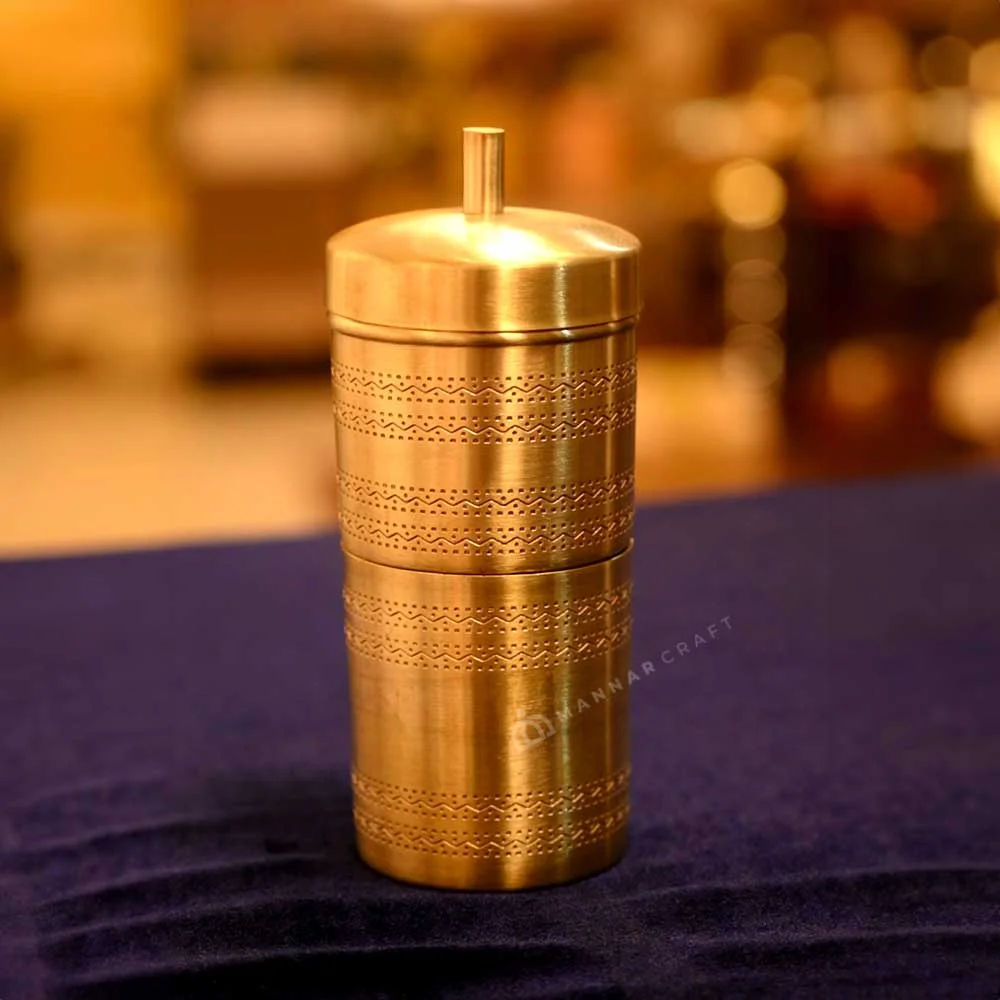
Using a brass pot and a piece of blotting paper from her son’s school notebook, she filtered her coffee for the first time. The result? A clean, flavorful cup that changed everything.
As I read about her story, I couldn’t help but smile. It reminded me of my own kitchen experiments proof that everyday frustrations often spark the most meaningful inventions.
From Kitchen Hack to Global Phenomenon
Soon after her discovery, Melitta patented her invention. What started as a small household solution quickly evolved into a global business. Paper coffee filters became widely available, and brewing coffee was never the same again.
Moreover, the introduction of disposable filters made coffee preparation more hygienic and convenient. People could now enjoy a consistent cup without worrying about residue or bitterness.
The Evolution of Coffee Filters Over Time
As coffee culture evolved, so did coffee filters. Paper filters became thinner and more refined. Meanwhile, metal filters re-emerged for those who preferred bold flavors. Cloth filters gained popularity among traditionalists and sustainability advocates.
Interestingly, each type of filter influenced taste differently. Paper filters absorbed oils, producing a lighter brew. Metal filters allowed oils through, creating a richer body. Cloth filters balanced both worlds.
Over time, I experimented with all of them, and each cup felt like a lesson in history one sip at a time.
Coffee Filters and Cultural Shifts
The origin of coffee filter is not just about brewing; it’s also about lifestyle changes. As coffeehouses became social hubs, filters ensured faster and cleaner service. At home, they allowed families to enjoy café-style coffee without specialized skills.
Furthermore, coffee filters played a role in shaping regional brewing styles. Pour-over methods thrived in Japan, while drip machines dominated Western households. All of this stemmed from that one simple idea: separating grounds from liquid efficiently.
Sustainability and the Modern Coffee Filter
In recent years, I’ve noticed a renewed interest in reusable filters. As environmental awareness grows, many coffee drinkers are questioning disposable paper filters.
However, innovation continues. Unbleached paper filters, compostable options, and reusable metal designs are bridging the gap between convenience and sustainability. Once again, the coffee filter adapts to the needs of its time—just as it did over a century ago.
Why the Coffee Filter Still Matters
Today, it’s easy to overlook the coffee filter amid high-tech machines and specialty beans. Yet, its importance remains unchanged. It controls extraction, enhances flavor, and defines the character of the brew.
Every morning, when I place a filter into my coffee maker, I feel connected to a long line of coffee lovers—people who sought better taste, simplicity, and comfort in a cup.
Closing Thoughts
The journey of the coffee filter from cloth and chaos to clean precision is a testament to how small inventions shape daily rituals. Whether you prefer paper, metal, or cloth, each filter carries a story of evolution and ingenuity.
So, the next time you brew a cup, pause for a moment. Notice the filter. Appreciate its role. And remember that behind every simple object lies a history worth telling.
Related Blogs